I often get asked about nutrition for exercise and unfortunately I am not qualified enough to give answers to individuals at this time but it is something I will be looking at in due course.
My stock answer at this moment is everyone is individual so what may work for one person may not work for another, we all need different vitamins, minerals to keep our bodies working to their optimum and age, sex, body type, weight for example will all have an effect on what our body needs.
I would always suggest moderation on the things that we all know are not ideal but at the same time life sometimes throws the unexpected and we need an ‘occasional’ chocolate binge – or is that just me.
However, I have done a little bit of research on electrolytes at the request of a couple of clients and have given an overview of some of my findings below and will be looking at trialling a few different ones over the coming months to see how they work for me.
So why do we need electrolytes?
Whether you are a runner, a dedicated gym goer or just find you feel drained after any sort of exertion it might mean you need to take in more electrolytes (however seek medical advice if you feel continuous lack of energy and not just after or during activity).
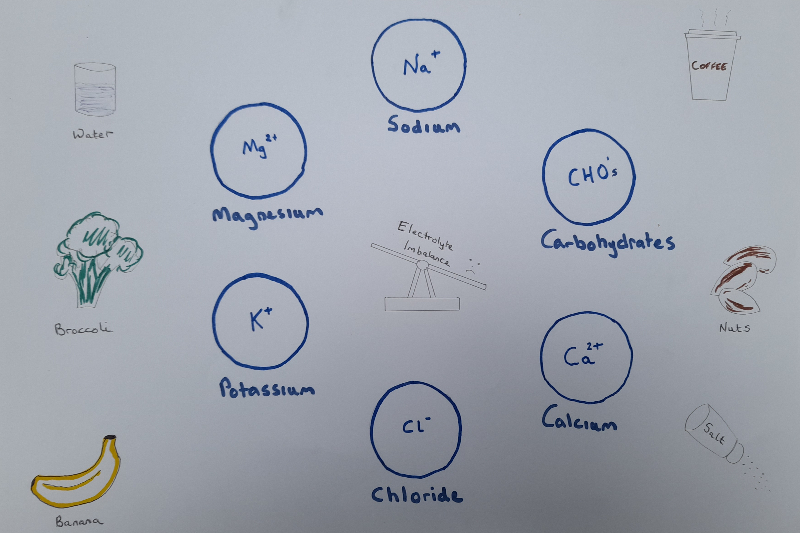
Electrolytes are the essential minerals our body requires to carry out many key functions, calcium, sodium and potassium are the three main ones that most people will have heard of and with a proper diet we should normally receive enough of these key minerals.
However, on a hot day where we over exert and sweat more than usual, how many of us have noticed the white particles on our face or on our clothes, this is the salts (general term for minerals rather than the condiment) we are losing from our bodies that we will need to replace.
Ever wondered why there are bananas after a race, high levels of potassium are found in bananas so a great way to replenish any lost potassium.
You may hear people saying too much potassium will kill you so don’t eat too many bananas – good luck eating about 400 bananas a day which is the approximate quantity needed to cause any issues.
With a well balanced diet (and plenty of water to stay hydrated at all times not just when its hot) you can usually get enough sodium, calcium, potassium and other minerals, eating plenty of leafy green vegetables, milk (or vegan alternatives), nuts, fruit will help but for those quick fixes after some over exertion there is a whole range of electrolyte replacement drinks.
What electrolyte drink should I have?
Unfortunately, I am not going to answer this question for you – everybody is different as I have said before and people’s needs and tastes differ but there are hundreds of alternatives out there and it is finding out which one suits you best.
What I will try and do is point out some things to look for when choosing an electrolyte replacement.
Taste – if you don’t like the taste are you seriously going to get into the habit of drinking it – some people are disciplined and will do whatever it takes to reach the top of their chosen profession – if someone told me to be the best runner in the world I would need to eat sprouts every day – it isn’t going to happen! Loads of choices out there so find one that tastes good.
Price – just because it costs more than everything else doesn’t mean it’s the best – marketing is a great tool – some of these branded products that might market with extra caffeine for those extra few pounds – have another cup of coffee. Shiny packaging works wonders to attract our attention but it comes at a cost. They might be the best, I haven’t tried them all but don’t assume.
Sodium (Na) Chloride (Cl) (Salt – NaCl) – we lose a lot of sodium when we run and exercise and its key functions include fluid balance and nerve function which is important for muscle contractions so we need to make sure the electrolyte drinks contain sodium. Might be expressed as sodium, sodium chloride or salt in mg or milligrams.
Potassium (K) – again this is needed to maintain the fluid balance which is important for muscle contraction – the reason for cramp is normally down to the imbalance of fluid – so the lack of water along with mainly Potassium and Sodium can certainly be a cause of cramps and muscle spasms.
Calcium (Ca), Magnesium (Mg) – key minerals for good bone health, regulating muscle contractions and heart rhythm and also helping muscles relax.
Carbohydrates – added energy (slow release from your diet / quick release from sugary treats)
Bicarbonates – delay fatigue
Caffeine – added kick (although a strong coffee will also do the job)
When should I take electrolytes?
If you are only during a short workout, a balanced diet and plenty of water should mean your body has enough of these essential minerals without replenishing them after every workout, but should you find you are losing a lot of fluid during the workout and it is perhaps over an hour long then maybe it is something to incorporate into your routine.
Some people also take electrolyte drinks prior to a workout to give them the energy boost. I have often found eating or drinking too much before a workout affects me and hinders my performance rather than benefits it but everyone will find what suits them best.
My own experiences
Personally, I have limited experience of electrolytes – I currently have a Vitamin C with Zinc in a pint of water everyday and eats lots of broccoli (at the insistence of my wife) and this gets me through most runs without too much issue – however I do have a terrible habit of using the sugary snacks to give me a quick boost before and after a run.
Occasionally I have toyed with gels and have found the odd one when into long miles gives me enough to push through but have never been one to have a one every mile or two to ensure I finish a race.
Earlier this year I competed in race around Oulton Park Race track which was basically keep running for 3 hours…..found a good pace and ticked along for 15 miles without any issue whatsoever…..then cramp arrived…at the end of every lap was a gel station so I started taking part of one onboard each lap (couldn’t stomach a full one), it helped, the cramp eased (as did my pace) but there was definitely some benefit – this was the idea of the race to see where the fitness levels were before a marathon a couple of months later – so the takeaway is use the training runs and races before your target race to try these things out – don’t wait until race day and then change tactics and habits – ‘fail to prepare – prepare to fail’.
However, I am now looking at stepping up a level in training and have set myself some quite hard targets and will be looking through the various options over the coming weeks and months so if you have a specific one that works for you or want some feedback on what that you fancy incorporating I will be happy to trial it and see how I get on with it.
Over the coming weeks I am going to look at some of the other supplements and write some short pieces on those. Turmeric appears to be one of the current favourites but also things like glucosamine, ginger, beetroot etc.
Thanks for reading and please let me know your experiences and thoughts.
Speak soon
Paul