Dr Kenzo Kase, a Japanese chiropractor felt the standard Zinc Oxide tape, (well known for holding rugby players together), was great for supporting the muscles and joints, and where needed, restricting the range of motion (and thus prevent further injury), however it also limited the potential for the natural healing process so he developed his Kinesio Taping Technique.
In the 1988 Seoul Olympics 50,000 rolls of tape were donated to 58 countries giving it exposure to the athletic world and although it has taken almost another 40 years it is now a product seen on Premier League footballers and Sunday morning runners alike.
So what is it?
It is not designed to be a miracle working solution to all your aches and pains – it is part of the toolbox us massage therapists can use alongside the numerous other techniques to hopefully help the client heal quicker and more efficiently but the concept behind it is as follows:-
When someone has an injury there are 5 identifiable signs
Pain
Swelling
Heat
Redness
Reduced Range of Motion
With the correct applications of the K tape the tape can lift the surface of the skin (as I demonstrate the visible lines of adhesive when explaining at my treatments), this helps alleviate the pain and allows an increase in space for the healing process to occur.
As the skin is lifted it allows more space for blood to flow into the area and lymph fluid to drain from the area, which in turn reduces the swelling (swelling often leads to increase in pressure which leads to increase in pain), if there is more blood and lymph flow then recovery and repair is accelerated.
So just the simple application of tape done in the correct way can help with the healing process no more complicated than that.
NB: Although it isn’t used for supporting a joint there will be an element of support and confidence instilled in the athlete when wearing the tape, however it is not to be used for this purpose and that is purely at the discretion of the user.
I am not going to go into the ins and outs on how to apply the tape as it can be used for dozens of different injuries and ailments such as plantar fasciitis, ankle sprains, achilles tendinopathies, knee pain, hamstring tightness, lower back pain, rotator cuff injuries, tennis and golfers elbow to name just a few can all benefit from the use of K tape treatment.
It can also be bought easily on online stores or in most running shops, however, I have found there are a few out there that the adhesive can be irritating or the quality of the tape doesn’t last very long so be careful in which one you choose. Alternatively, come and see me and I will sort out some for you to try and I can then recommend what I use.
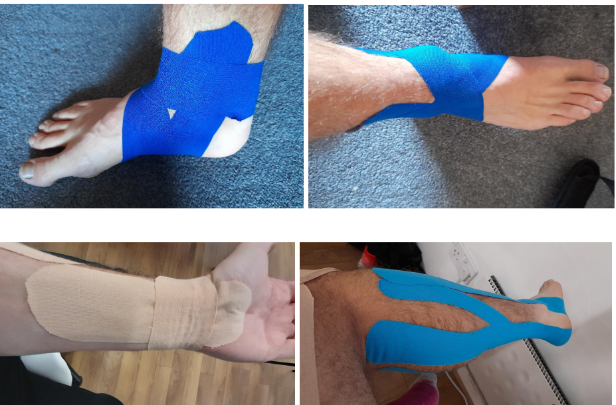
Below are a few pictures of the tape in use on my good self.
If you want any further information get in touch or ask about K Tape next time you pop in for a treatment.
Thanks for reading.
Paul