Firstly, some short concise points about the Achilles tendon:-
- A tendon is a band of tough fibrous connective tissue that attaches muscles to bones.
- The Achilles tendon attaches the calf muscles to the heel bone.
- Achilles was a warrior from Greek mythology – when he was a baby his mother dipped him in the River Styx to make him invulnerable, holding him by his ankles.
- He was killed by a poison dart in his heel, the spot where she held him which had been untouched by the water – his only vulnerable spot.
- First referred to as the Achilles tendon back in the 17th century (according to written records).
- It’s the thickest tendon in the human body.
As upright walking mammals we use our achilles tendons almost continuously from about 12 months old when standing, walking and running – only really give them a rest when we ‘put our feet up’.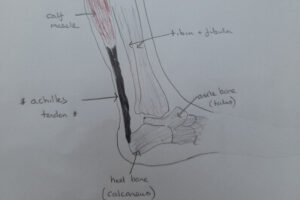
When running it is thought to be in excess of 5x our body-weight passing through that relatively thin tendon – that is a lot of stress!
However, this isn’t the excuse you have been waiting for to tell your friends you aren’t running because you need to rest the achilles. In order to strengthen tendons need to be exposed to load, by using them they strengthen, adapt and become more robust but unfortunately too much too soon and we can risk overload and injury.
Anyone who has suffered with an achilles injury will tell you it is a right pain in the……ankle!!
Achilles Tendinopathy
Tendinopathy is now the widely accepted term for injuries to the achilles area – historically it was referred to tendonitis but ‘itis’ is specifically used for inflammation (think tonsillitis – inflammation of the tonsils) and not every injury to the achilles is inflamed.
So tendinopathy is a failed response of the tendon to an increase in load and it usually occurs over a period of time rather than a sudden onset.
With tendons they are always in a cycle of damage, repair, regenerate if we don’t give them enough time between each stage we run the risk of developing tendinopathy.
**You can also rupture your achilles tendon – if this is the case you wouldn’t be walking in to see me you would be in A&E so I am not going to go into that in this blog.
Causes
As mentioned the main cause is likely to be overuse and not enough rest but such things as increased mileage on your weekend walk or run, increased intensity or even different surfaces. I know a runner/coach who swears by running most of his training off road. The softer terrain is more forgiving and the undulations help strengthen the ankles.
Changes in footwear or using the incorrect footwear for the job at hand, I recently tried a different brand of trainer and although when running in them they felt great the following morning my achilles were suffering – all down to a couple of millimetres difference in the drop.
Bio-mechanics – whether due to genetics or poor technique if the hips, knees, ankles are not aligned or operating efficiently then this could lead to imbalance (might be worth a postural assessment?)
When discussing your achilles issues with your physio, mention as much as possible it might be something you hadn’t thought of that has caused the issue.
Symptoms
Early signs of an issue in the achilles would be some stiffness in the morning after a run or walk or a bit of soreness when you first set off.
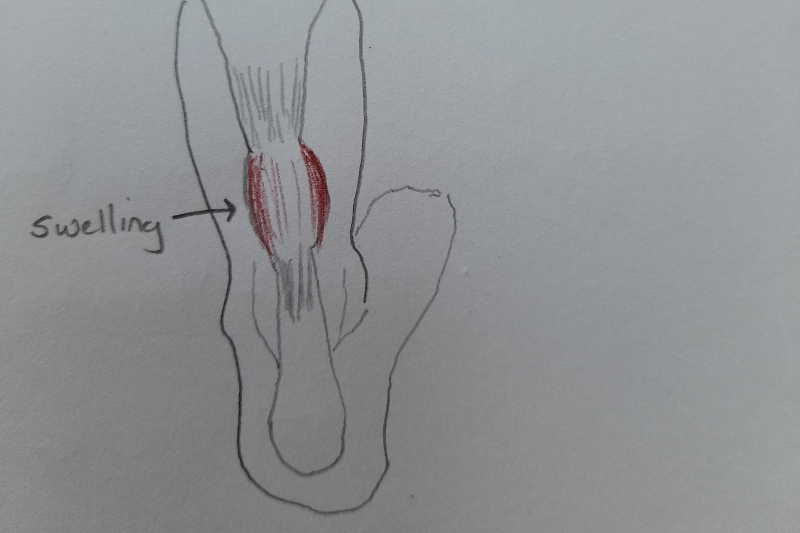
What would likely happen then is the body will try and protect the achilles and you may find some thickening or swelling in the achilles area. This may be accompanied by a dull ache or pain as the swelling will be reducing the range of motion. Also, some tenderness on the back of the heel bone may be experienced.
The longer the problem persists you might start noticing lumps or nodules in the area and a more constant pain as blood vessels and nerves increase in the area which is going to lead to longer term degeneration of the tendon.
What can we do about it?
I am going to write a separate blog about things that could be done to help prevent, cure and treat…..in the next week or so .
But my first piece of advice if you find you are getting issues with your achilles is to ease back on any activity that causes any aggravation.
Then I personally would recommend alternating heat and ice (ice if there is any swelling) and if in doubt speak to someone about it.
Any questions please don’t hesitate to ask me, I’m here to help and hopefully keep you running. If you ignore it will get worse.
Thanks for reading and watch this space for the next blog on treatments, exercises and prevention.
Paul
Tags :
- #acute #inflammatory #proliferation #remodelling #chronic #healing #stagesofhealing #sportstherapy #rehabilitation#kinisipower #sportsmassage #drinkwater #aftercare #healthy living #move more #feel better#pain #recovery #swelling #achilles #injury #tendinopathyFitnessHealthmovementpainSports Therapy